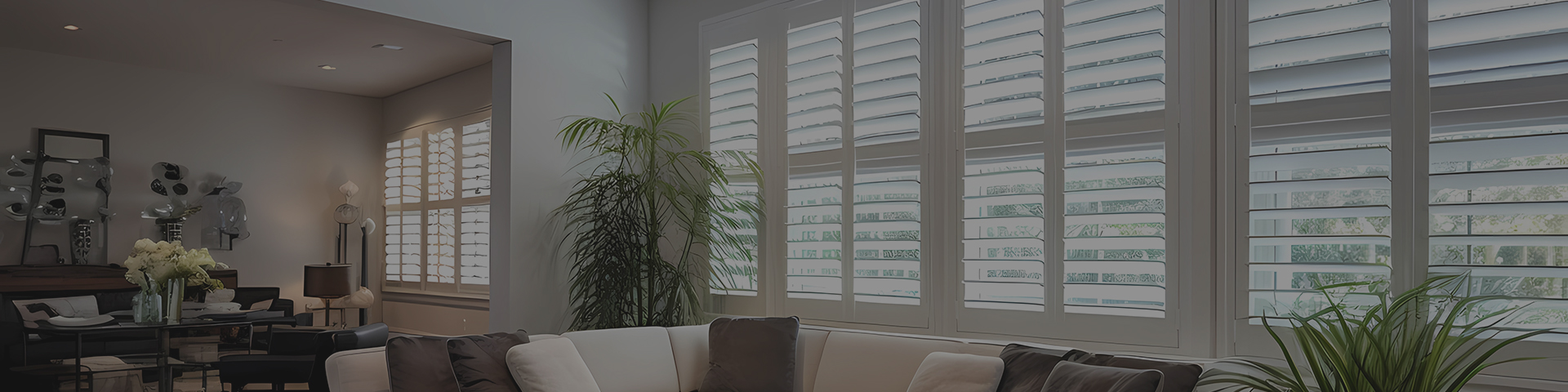
Best Blinds for Living Rooms
Steven Sampson - 24th April 2026 · Updated 13th August 2026
Living-room blinds have to work from bright daytime through to evening privacy. This guide compares the main styles, explains which windows they suit, and shows how to balance natural light, glare, appearance, cleaning and everyday access.
The best living-room blinds balance daylight, privacy and appearance across the whole day. Unlike a bedroom, a living room often needs bright natural light in the morning or afternoon, screen-glare control when the television is on, privacy after dark and a finish that looks intentional even when the blind is fully open.
That means there is no single “best” style for every lounge. Roller blinds suit clean modern rooms, Roman blinds add fabric and softness, Venetian-style slats give precise directional control, day-and-night blinds offer flexible filtering, and vertical blinds remain practical for wide glazing and patio doors.
Direct Answer: What Are the Best Blinds for a Living Room?
Choose by the way the room is used, not by popularity alone. For a simple, versatile treatment, roller blinds are difficult to beat. For a softer decorative finish, Roman blinds work well. For changing light and privacy through the day, slatted or day-and-night systems provide more adjustment. For very wide windows and doors, vertical blinds can be practical and easy to stack.
The strongest result is usually made-to-measure because the blind can be proportioned around the actual window, furniture, door movement and sightlines in the room.
What a Living-Room Blind Needs to Do
| Priority | What to look for | Common mistake |
|---|
| Daylight | A fabric or slat system that can soften glare without making the room permanently dark. | Choosing blackout everywhere simply because it sounds premium. |
| Evening privacy | Coverage that prevents clear views into the room once interior lights are on. | Assuming daytime privacy fabric will work the same way at night. |
| TV glare | Directional slats or controllable fabric coverage on the window facing the screen. | Treating every window identically when only one causes glare. |
| Appearance | Proportions, texture and colour that work with flooring, walls and furniture. | Choosing from a small swatch without considering the full window area. |
| Daily use | Smooth, accessible operation that suits how often the blind will move. | Ignoring furniture or handles that make the controls difficult to reach. |
Roller Blinds: Best for Simple, Flexible Design
Roller blinds suit living rooms because the mechanism is visually quiet and the fabric becomes the main design choice. Light-filtering fabrics can soften bright windows while keeping the room open; denser fabrics can provide stronger evening privacy or help with television glare.
They work particularly well when you want the blind to disappear neatly above the glass when open. For wide windows, check the maximum practical width and whether one large blind or several aligned blinds will operate more smoothly.
Roman Blinds: Best for Softness and Texture
Roman blinds use more visible fabric and create horizontal folds when raised, so they have a stronger decorative presence. They can be an excellent choice in rooms with upholstered furniture, rugs and layered textures because the window treatment feels integrated with the interior rather than purely functional.
The trade-off is stack depth. A Roman blind can cover more of the upper glass when raised than a slim roller, which matters if you are trying to maximise daylight on a smaller window.
Venetian and Slatted Blinds: Best for Directional Control
Adjustable slats are useful when sunlight changes angle through the day. You can redirect light toward the ceiling, reduce glare on a screen or create privacy without fully closing the window covering.
In a living room that faces a pavement or neighbouring property, this fine control can be more useful than a blind that only moves up and down. The slat finish also changes the visual character: painted, timber-look, metallic and matt finishes create very different effects.
Day-and-Night Blinds: Best for Graduated Privacy
Alternating sheer and denser bands allow the blind to move between a more open filtered-light position and a more private position without rolling fully away. This suits living rooms that are occupied throughout the day and where the view or privacy requirement changes frequently.
They should not be treated as automatic blackout blinds. If darkness for a projector or media setup is important, discuss the exact fabric and edge gaps rather than relying on the style name.
Vertical Blinds: Best for Patio Doors and Wide Glazing
Vertical blinds remain useful on large expanses of glass because the louvres can traverse to one side and tilt independently. This gives access to doors while still controlling light on the rest of the opening.
For a contemporary finish, pay attention to louvre width, track colour and stack position. A well-planned vertical blind can look deliberate; a poorly sized one can block handles or bunch where the door needs to open.
Which Blind Works Best for Your Living-Room Layout?
Small roomCompact window
A slim roller or neat slatted blind can keep the window visually light and avoid a bulky stack.
Wide glazingPatio or bifold area
Consider how the blind stacks, where the doors open and whether you need independent control across several panels.
Street-facingPrivacy matters
Adjustable slats or a filtered/privacy fabric can help retain daylight while reducing direct views into the room.
Media roomScreen glare
Prioritise controllable coverage on the windows that reflect in the television rather than automatically darkening every window.
Living-Room Blinds and Natural Light
The aim is usually to control daylight rather than remove it. On bright south- or west-facing glazing, a light-filtering fabric can reduce harsh contrast and glare while keeping the room usable. On darker north-facing windows, a bulky or very dense treatment can make the space feel unnecessarily closed in.
Use the Room at Different Times Before Choosing
Look at the window in the morning, mid-afternoon and after dark. Note where glare appears, when neighbours can see in, and how furniture casts shadows. A blind chosen from a daytime showroom sample can behave very differently when the room lights are on in the evening.
Colour, Texture and Proportion
Large blinds occupy a significant visual area when closed, so a tiny fabric sample can be misleading. Warm neutrals tend to blend with timber and softer interiors; cooler colours can work with stone, metal and crisp modern finishes; texture can make a plain colour feel more considered without adding a strong pattern.
Look at living-room blind installations to judge complete windows rather than isolated swatches. Pay attention to how the headrail, brackets, side gaps and stack position affect the finished look.
Should Living-Room Blinds Match Throughout the House?
Consistency can make adjoining spaces feel calmer, but exact matching is not essential. It is often better to repeat a colour family or hardware finish while changing the blind type to suit the room. A patio-door blind may need a different mechanism from a small front window even when the fabrics coordinate.
Privacy in Daylight vs Privacy at Night
Privacy fabrics behave differently depending on which side is brighter. A material that obscures views from outside during daylight may become much less private after dark when the room is brightly lit. If evening privacy is important, check the material in a backlit condition or choose a design that closes to a more opaque position.
Maintenance and Everyday Practicality
Lower-maintenance choices often have…
- Simple surfaces that can be dusted regularly.
- Easy access to the full blind when cleaning.
- Controls that are not blocked by sofas or shelving.
- Materials suited to pets, children and frequent handling.
More decorative choices may need…
- Gentler vacuuming or spot cleaning.
- Extra care around folds, textured fabrics or trims.
- More clearance so fabric stacks do not rub furniture.
- Specific cleaning methods from the supplier.
How to Compare Living-Room Blind Quotes
- Confirm whether measuring and fitting are included.
- Compare the same fabric grade and operating system.
- Ask how wide windows will be divided, if necessary.
- Check the planned fitting position and stack depth.
- Ask what evening privacy the chosen fabric provides.
- Confirm whether door handles or trickle vents affect the fit.
- Ask how the blind should be cleaned and maintained.
- Check lead time, aftercare and what happens if a measured fit is wrong.
You can compare the overall service through Aspire’s made-to-measure blind services and use Aspire Blinds reviews to understand how customers describe measuring, fitting and aftercare.
A Practical Living-Room Decision Checklist
- Do I need maximum daylight, flexible filtering or strong room darkening?
- Is the room overlooked during the day or after dark?
- Which window causes television or laptop glare?
- Do doors need to remain easy to access?
- How much space is available for the blind to stack?
- Will the colour still work when the whole blind is closed?
- Can I comfortably reach and operate the control?
- Is the material suitable for pets, children or frequent use?
- Do several windows need to align visually?
- Would combining blinds with curtains improve the room?
How Window Orientation Changes Living-Room Blind Choice
| Orientation | Common effect | Useful response |
|---|
| East-facing | Strong low-angle morning light. | Use adjustable filtering if the room is used for breakfast, work or television in the morning. |
| South-facing | Long periods of direct light and potential glare. | Prioritise flexible solar control rather than a blind that is either fully open or fully closed. |
| West-facing | Late-afternoon glare and heat. | Choose a blind that is easy to adjust before the room overheats or the television becomes hard to see. |
| North-facing | Softer daylight with fewer direct-sun periods. | Avoid unnecessarily dense fabrics if preserving natural brightness matters. |
Bay Windows: One Blind or Several?
Living-room bays often look simple until you consider the depth of each headrail and the angles between windows. Several separate blinds can give precise control and a lighter appearance, but they must be positioned so brackets, chains, wands and fabric rolls do not clash at the corners.
A single treatment across a bay can look cleaner in some designs but may reduce independent control. Before ordering, decide whether you want each pane to operate separately and how the blinds will look from outside as well as inside.
Large Windows: When One Blind Becomes Too Much
Very wide blinds can become heavy, require larger tubes or headrails and place more load on controls. Dividing a wide opening into two or three coordinated blinds can improve operation and allow different sections to be shaded independently.
The visual trade-off is the join between the blinds. Align divisions with mullions or door frames where possible so the split looks intentional rather than arbitrary.
Living Rooms With Children or Pets
ChildrenSafe operation
Choose safe-by-design controls where possible and keep climbable furniture away from cords or chains. Easy operation also reduces the temptation to pull fabric by hand.
CatsClimbing and scratching
Avoid delicate hanging louvres or loose fabric in a window the cat regularly uses as a route or lookout point.
DogsLow-level contact
A blind that stops at a patio door may be bumped repeatedly. Consider robust materials and a stack position that clears the normal walking route.
Busy familyFrequent use
Simple controls and cleanable finishes may create more value than a high-maintenance fabric chosen only for appearance.
Testing Evening Privacy Before You Buy
A sample held up in daylight does not tell you how private the room will be after dark. If the chosen fabric is sheer or light-filtering, ask how it behaves when the room is lit from inside. Some fabrics obscure views effectively by day but allow silhouettes or detail to be seen at night.
Use a Simple Backlight Test
Hold the sample in front of a bright lamp or window and look from the darker side. It is not a laboratory test, but it helps reveal how much the material changes when light comes from behind it.
How Blinds Work With Curtains in a Living Room
Curtains and blinds do not have to compete. A slim roller or slatted blind can handle daytime glare and privacy while curtains add evening softness and a broader decorative frame around the window.
If you layer them, plan the projection. A bulky blind headrail can push curtains outward, while a curtain pole mounted too close can block access to the blind control. The two treatments should be designed together.
Motorised Living-Room Blinds
Motorisation is most useful where blinds are wide, high or adjusted several times a day. In an open-plan room with several matching windows, grouped control can make it easier to manage sun consistently without walking around the room adjusting each blind manually.
Check battery access, charging position, noise, manual override and whether multiple blinds will stop at consistent positions. Smart-home integration is a convenience feature, not a reason to compromise on fabric or fit.
Choosing Between One Strong Statement and a Quiet Background
Make the blind a feature when…
- The room has simple walls and furniture that can support more texture or pattern.
- The window is a focal point.
- You are happy to coordinate future décor around the fabric.
- The blind will be visible in a large area when closed.
Keep the blind visually quiet when…
- Artwork, flooring or furniture already provides strong pattern.
- Several windows need to feel consistent.
- You expect to redecorate before replacing the blinds.
- The main goal is practical light control rather than decoration.
Living-Room Sample Checklist
- View the sample against the actual wall colour.
- Hold it vertically rather than flat on a table.
- Look at it in direct sun, shade and artificial light.
- Check the backlit appearance from both sides.
- Compare it with flooring, sofa fabric and timber finishes.
- Ask to see the headrail or track colour as well as the fabric.
- Imagine the whole window covered, not just the small sample.
- Confirm the cleaning method before choosing a pale or textured fabric.
Television Glare and Screen Position
If a television sits opposite or beside a bright window, the best blind is usually one you can adjust without making the whole room dark. Slatted or dual-layer systems can reduce a direct reflection while retaining useful daylight elsewhere in the room.
Test the glare problem at the time it normally occurs. A fabric that looks ideal in a morning consultation may behave very differently when low western sun reaches the screen in late afternoon.
Coordinating Blinds Across an Open-Plan Room
Open-plan spaces often contain several window types with different functional needs. Matching every blind exactly can create compromises; a better approach is to repeat one design element—such as colour, headrail finish or fabric family—while allowing the blind type to change where the window demands it.
- Keep control heights visually consistent where practical.
- Align split points with frames or mullions.
- Repeat one or two finishes instead of introducing a new colour at every window.
- Check how all blinds look from the main seating position when closed.
Final Verdict: The Best Blinds for Living Rooms
The best living-room blind is the one that lets the room change with the day. Roller blinds are a strong all-rounder, Roman blinds add softness, slatted blinds give detailed light control, day-and-night blinds offer flexible filtering, and vertical blinds remain practical for large glazed openings.
For a tailored recommendation, start with Aspire Blinds and request a living-room blinds quote. Describe the room orientation, window sizes, patio-door access, privacy needs and where glare occurs so the specification is based on how the room actually functions.
A living-room blind should look right at midday, work properly at sunset and still make sense when the room lights are on at night.